
Overview of LED Array Methods
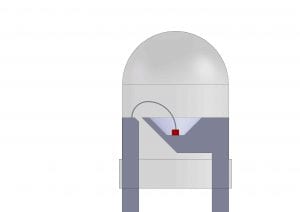
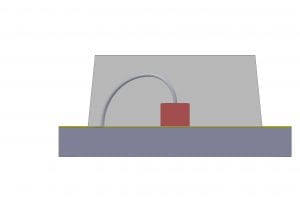
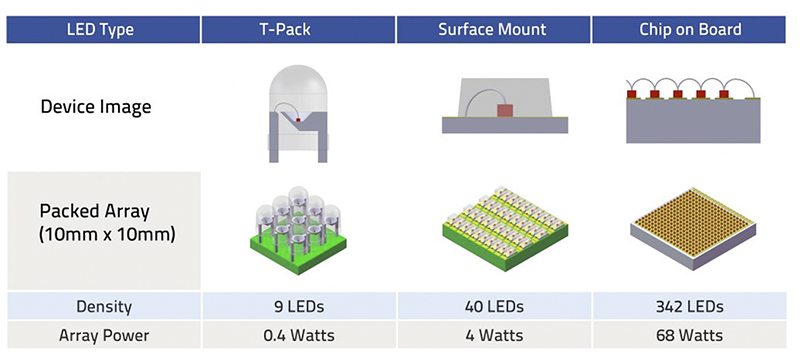
LED arrays can be built using several methods. Each method hinges on the manner in which the chips themselves are packaged by the LED semiconductor manufacturer. Examples of packaged, lensed LEDs are shown in Figures 1, 2 and 3.

Figure 1: Through hole LED

Figure 2: Surface mount colored LED

Figure 3: Surface mount white-emitting
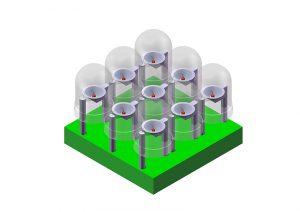
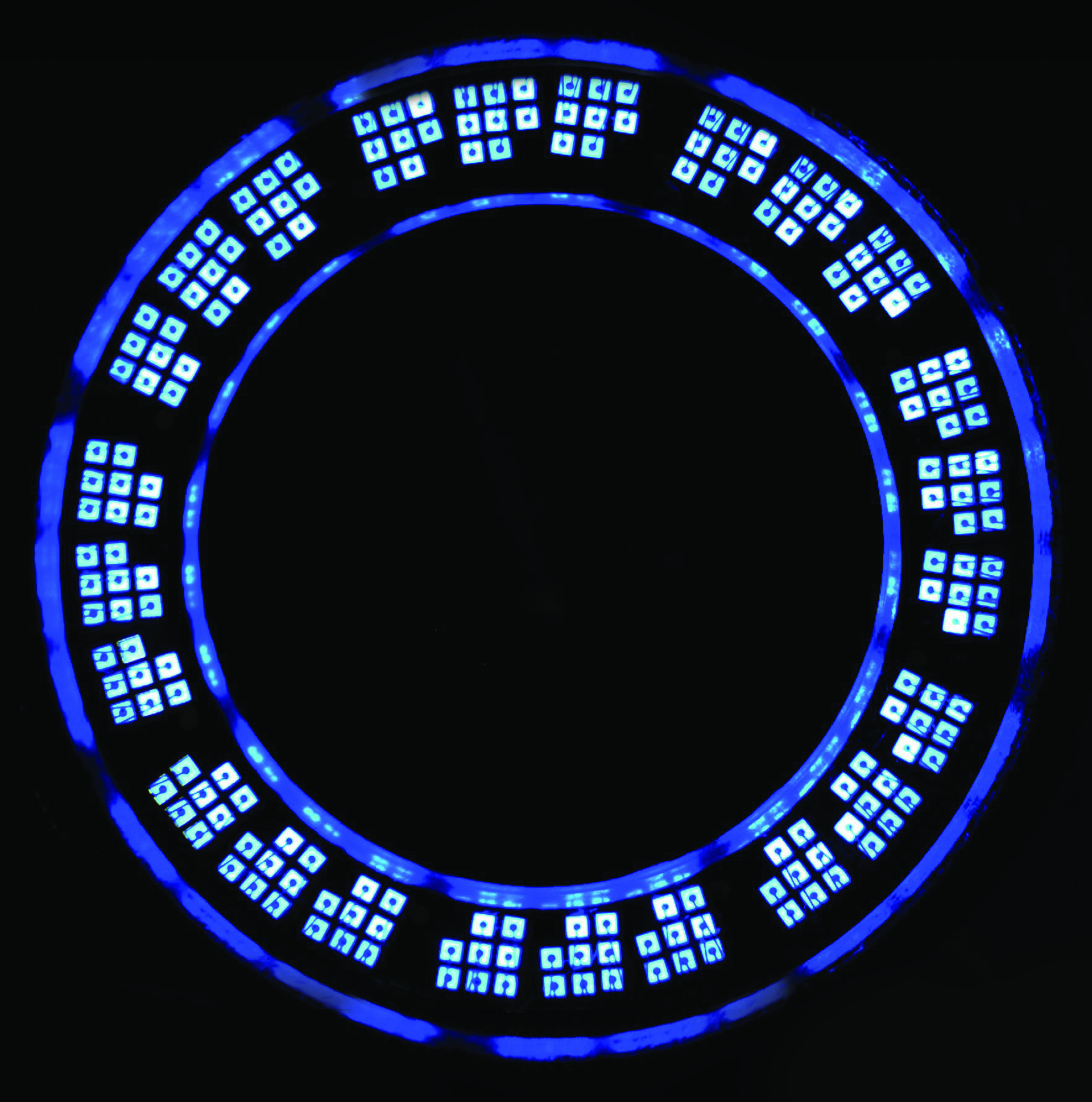
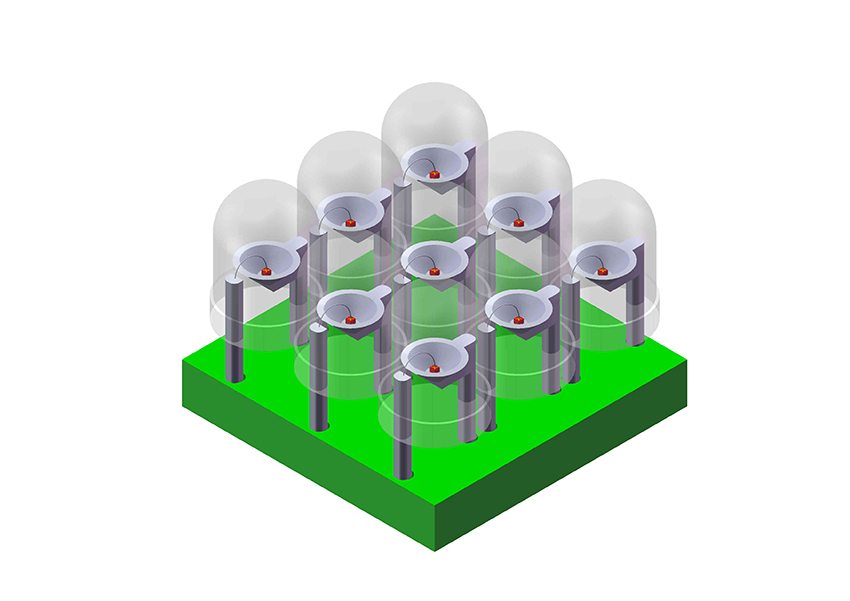
These packages can be affixed to a heat-sinking substrate using either "through hole" mounting or surface mounting. The through-hole mounted devices are often referred to as t-pack LEDs (with designations T1, T3, T5, etc.). Arrays built of through-hole LEDs are shown in Figures 4.

Figure 4: LED Array comprised of t-packs
Importantly, it is also possible to procure wafers of bare, unpackaged semiconductor LED chips, also called "die". See Figures 5 and 6.

Figure 5: Semiconductor LED wafer
Figure 6: Chip-on-board array. In this example, blue and red LEDs are interleaved
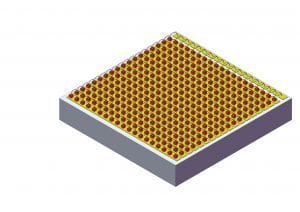
Using automated pick-and-place machines, ProPhotonix attaches individual LED chips to printed circuit boards, creating so-called "chip-on-board" LED arrays.

Figure 6: Chip-on-board array. In this example, blue and red LEDs are interleaved
|

|

|
|
Figure 7: Microscope images of chip-on-board LED array.
|
Figure 8: Highly magnified microscope images of chip-on-board LED array.
|
Figures 9 and 10 show larger regions of chip-on-board arrays.
|

|

|
|
Figure 9: Chip-on-board LED array. The LED chips are the dark dice in the gold-colored horizontal stripe at the top of the board.
|
Figure 10: Chip-on-board LED array
|
An LED array is generally built up on a printed circuit board. The pins or pads or actual surfaces of the LED chips are attached to conductive tracks on the PCB. PCB materials may include fiberglass-filled epoxy, ceramics or insulated metals, chosen for their thermal and mechanical properties.
With the LED chips or LED packages attached directly to a printed circuit board, arrays can be powered and controlleed with on board or external electronics.
|